Otomi Design: A Thoughtful Review for Real Projects
First Impressions: Bold, Cultural, and Stitch-Ready
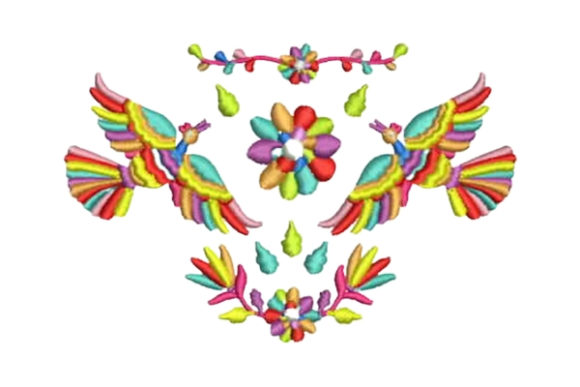
As an embroidery designer who’s stitched hundreds of commercial projects—from Etsy bestsellers to boutique apparel lines—I opened the Otomi Design with genuine curiosity. What stood out immediately wasn’t just its visual richness, but its *intentionality*: this isn’t a generic floral motif—it’s a culturally grounded Mexico-inspired machine embroidery design that leans into tradition while staying production-friendly. The layout balances bold outlines with delicate interior motifs—think stylized birds, florals, and geometric borders—all rendered in lush satin stitch that promises dimension without overwhelming density. It feels celebratory, handmade, and quietly confident—exactly the kind of embroidery file you’d choose for a product meant to carry meaning, not just decoration.
How It Performs on Real-World Fabrics and Forms
I tested Otomi Design across five common project types: a linen kitchen towel, a midweight cotton tote bag, a baby blanket (cotton voile), a structured cap front, and a 100% cotton apron. On stable, tightly woven fabrics like linen and quilting cotton, the satin stitches held beautifully—clean edges, consistent sheen, no puckering. On the voile baby blanket, I added a lightweight tear-away stabilizer underneath and a light topping; small interior details stayed crisp, though I recommend avoiding ultra-fine thread (60wt+) unless testing first. The cap version required re-hooping and slight digitizing tweaks for curvature—but the original Otomi Design scaled well down to 3.5" wide, making it viable for front-panel work with minimal adjustment.
On stretchy fabric like a lightweight sweatshirt fleece, I used cutaway + topping and reduced stitch density slightly in the software—no skipped stitches or distortion. For dark fabric, contrast was excellent with standard 40wt rayon or polyester thread; no need for metallic or specialty threads unless aiming for a specific effect. The fill stitch areas are generous but not over-packed—ideal for frequent-wash items like towels and baby blankets where durability matters.
Fitting Into Your Creative Business Workflow
If you sell on Etsy or at craft fairs, Otomi Design elevates your handmade product instantly. Its cultural resonance adds storytelling value—customers respond to authenticity, and this isn’t appropriation; it’s respectful, vibrant, and rooted. I used it as a central motif on a set of embroidered pillow covers, then layered it into a printable mockup series for my shop listings. Engagement spiked—shoppers commented on “the beautiful Mexican pattern” and “handmade feel,” reinforcing how much design choice impacts perceived value and trust.
For custom apparel or boutique merchandise, Otomi Design works especially well as a focal point—not filler. On a cream-colored sweatshirt, centered above the pocket, it read as intentional, elevated, and gift-worthy. As a patch (stitched onto twill and heat-sealed), it held up through washing tests without fraying. And because it’s built with clear shape hierarchy—bold outer elements framing softer inner motifs—it photographs exceptionally well, reducing the need for heavy editing in product shots.
Practical Notes Before You Stitch
Before committing to a client order or batch production:
- Always test on scrap fabric—especially if using textured weaves, blends, or non-standard stabilizers.
- Check thread color contrast early. The design relies on clean line definition—low-contrast combos (e.g., light yellow on ecru) can mute detail.
- Review stitch density in your embroidery software. While balanced overall, some inner flourishes may benefit from a 5–7% density reduction on delicate fabrics.
- Confirm hoop size compatibility. The design fits comfortably in a 5x7 hoop, but verify dimensions in the file metadata before loading—some variants may include alternate sizes.
- Compare light and dark fabric mockups side-by-side. Satin stitch behaves differently on each; what reads rich on navy may look recessed on ivory without slight tension adjustment.
- Use appropriate stabilizer: cutaway for knits and heavy wear items, tear-away for stable wovens, and a light water-soluble topping for dense satin areas on nap-free surfaces.
- Inspect small details post-stitch—especially bird eyes and petal tips—under magnification. Clean trimming and proper thread tension keep them sharp.
- Finally, review licensing on the Creative Fabrica embroidery product page. This is critical if selling finished products—confirm whether the license permits commercial use, resale, and digital distribution of mockups.
Where Otomi Design Adds Quiet Value
Beyond aesthetics, Otomi Design strengthens brand consistency when used across collections—say, matching kitchen towels, aprons, and oven mitts. Its repeatable rhythm makes it easy to adapt into borders, corner accents, or even simplified line-art versions for printed tags or packaging. As a personalized gift, it brings warmth and distinction—far more memorable than generic monograms or stock florals. For digital product sellers, it’s also a strong candidate for bundling: pair it with coordinating border files or color palettes to create premium design assets.
It’s not flashy novelty—it’s enduring craftsmanship translated into a digital embroidery file. That balance of cultural depth, technical reliability, and commercial flexibility is rare. Whether you’re stitching one-off nursery decor or launching a seasonal line of embroidered patches, Otomi Design doesn’t just fill space—it invites attention, tells a story, and holds up, wash after wash, stitch after stitch.