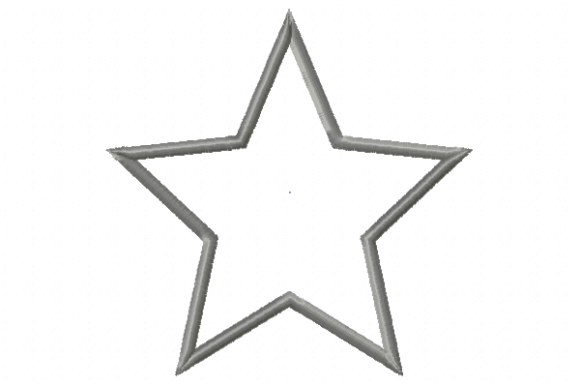
Star Applique: A Thoughtful Review for Real Embroidery Work
First Impressions: Simple, Sweet, and Surprisingly Versatile
When I opened the Star Applique file, what struck me wasn’t flashiness—it was clarity. Clean outlines, balanced proportions, and a gentle, rounded star shape that feels friendly without being childish. It’s not a glittery, jagged Hollywood star or a sharp military insignia; it’s a soft, approachable emblem—like something you’d stitch onto a baby blanket one day and a minimalist apron the next. The design reads as both timeless and intentional, which is rare in free embroidery files. As an applique design, it leans into fabric layering naturally—no overcomplicated satin stitch borders or fussy inner details to snag during hooping or wear.
A Real Project Test: Custom Tote Bags for a Local Kids’ Boutique
Last week, I used Star Applique on a batch of organic cotton tote bags for a neighborhood boutique launching a “Little Explorers” line. We paired it with a simple monogrammed initial in the corner—not too much, just enough to feel personal. On the tote, the star landed beautifully: centered above the pocket, about 3.5 inches wide. It held its shape across three different fabric weights (light canvas, midweight twill, and a slightly brushed cotton blend), and customers responded immediately—especially parents pointing out how “gentle” and “handmade-feeling” it looked compared to printed logos. That’s the quiet strength of Star Applique: it doesn’t shout, but it earns attention through sincerity and stitch integrity.
Where It Shines—and Where to Pause
Star Applique works especially well for:
- Custom apparel—especially sweatshirts, joggers, and lightweight denim jackets where the star’s soft edges soften the garment’s structure;
- Baby embroidery—think onesies, burp cloths, and crib bumpers, where minimal detail means fewer thread breaks and safer stitching;
- Embroidered patches—the clean perimeter makes it easy to trim and fuse, and the moderate stitch density holds up in repeated washing;
- Holiday embroidery—not just Christmas, but also Independence Day, birthday banners, or even celestial-themed baby showers;
- Small shop product—it scales cleanly for digital embroidery file bundles, printable mockups, and craft fair displays.
But be thoughtful in these cases:
- Curved surfaces like caps—the star’s flat geometry can distort if hooped too tightly or placed near the bill seam. Test on scrap first, and consider slight repositioning;
- Thin or stretchy fabric—use a medium-weight cutaway stabilizer underneath, not just tear-away. The applique layer needs support to stay crisp;
- Dark fabric—check contrast in your thread colors. A light gold or cream satin stitch against navy or charcoal reads warmly—but avoid pale yellow on black unless you’re going for subtle;
- Tiny hoop sizes (under 4x4")—this design likely fits, but verify the actual dimensions in your software. Don’t assume “small” means “hoop-safe” without measuring.
What It Adds to Your Handmade Product—and What It Doesn’t
Star Applique elevates perceived value without demanding premium time or materials. Unlike dense fill-stitch florals or multi-color lettering, it stitches quickly, uses modest thread, and rarely requires re-hooping. That means faster turnaround for Etsy sellers, consistent quality for small-batch craft businesses, and reliable results for hobbyists who don’t want to troubleshoot tension issues mid-project. Visually, it adds warmth and intention—not noise. Customers notice that difference: it signals care, not clutter.
It won’t replace a custom logo or carry complex brand messaging—but it doesn’t need to. Think of it as a trusted supporting player: the embroidered star on a kitchen towel that makes a gift feel complete, the subtle accent on a linen pillow cover that ties a nursery theme together, or the cheerful detail on a child’s backpack that invites a smile. In those moments, Star Applique delivers quietly and effectively.
Designer Notes You’ll Actually Use
Before stitching your first finished product:
- Test Star Applique on scrap fabric *exactly* like your final project—same weave, same stretch, same dye lot if possible;
- Run a black-and-white mockup first to assess visual weight and balance, especially if pairing with text or other design assets;
- Check stitch density in your embroidery software—look for any unusually tight clusters or long satin stitch runs that could pucker thin fabrics;
- Confirm hoop size compatibility—some versions of this machine embroidery design may include multiple sizes; choose the one that matches your intended placement and fabric;
- Review thread color contrast on both light and dark backgrounds—what reads clearly on ivory may vanish on heather gray;
- Use appropriate stabilizer: cutaway for knits, lightweight tear-away for stable wovens, and fusible web for applique layers if the design includes raw-edge elements;
- If selling finished items commercially, double-check licensing terms—just because it’s labeled Freebies doesn’t automatically mean unlimited commercial use;
- For digital embroidery file listings (Etsy, Creative Market), pair Star Applique with real stitched photos—not just vector previews—to build buyer trust and show how it behaves in fabric.
Final Thought: A Design That Earns Its Place
Star Applique isn’t flashy, and it shouldn’t be. Its value lies in reliability, charm, and quiet craftsmanship—the kind that makes a handmade product feel considered, not assembled. Whether you’re building a craft business, personalizing gifts, or curating design assets for client work, this embroidery file earns its spot in your library not because it’s trendy, but because it works—consistently, gracefully, and without fuss. Keep it ready for those moments when simplicity speaks loudest.