Ladybug: A Whimsical Stitch That Delivers
First Impressions: Bright, Bold, and Unmistakably Hand-Crafted
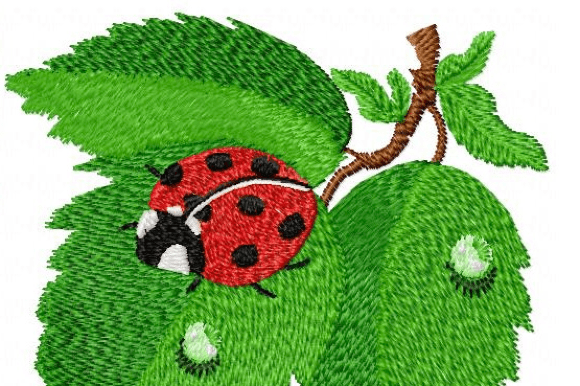
When I opened the Ladybug embroidery file, what struck me first wasn’t just the cheerful red-and-black palette—it was the hand-drawn warmth in the curves. This isn’t a stiff vector knockoff; it’s a machine embroidery design that feels like it was sketched by someone who’s watched ladybugs crawl across sun-warmed leaves. The antennae have gentle taper, the spots are slightly irregular (in the best way), and the satin-stitched shell has subtle dimension—no flat fill-stitch monotony here. It reads as joyful but not childish, playful but not cutesy. That balance matters—especially if you’re stitching for boutique baby onesies or minimalist kitchen towels.
A Real-World Test: Embroidering Ladybug on a Linen Tea Towel
Last week, I used Ladybug on a natural linen tea towel for a small shop launch. No appliqué, no backing graphics—just the design centered above the hem. I chose cotton thread over silk for durability (this towel gets washed weekly), and paired it with medium-weight tear-away stabilizer. The result? Crisp edges, zero puckering, and a finish that looked handmade—not mass-produced. Customers paused at the rack. One said, “It makes me smile every time I dry my hands.” That’s the quiet power of a well-executed Ladybug: it elevates an everyday item into a personalized gift without shouting.
Where Ladybug Shines—and Where It Needs Thought
Ladybug excels on stable, medium-weight fabrics: cotton tote bags, canvas aprons, structured sweatshirts, and pillow covers. Its moderate stitch density holds up beautifully on terry cloth towels and midweight knits—just add cut-away stabilizer behind stretchy fabric to keep those rounded wings from distorting. On baby onesies? Yes—but avoid placing it directly over seams or elastic hems where tension pulls threads. For caps or curved surfaces, test hoop placement first: the rounded body flows naturally over crowns, but the antennae may need slight repositioning to avoid shadowing.
It’s less ideal for ultra-fine silks or sheer voiles—those delicate spots and thin legs can blur without dense underlay or precise tension control. And while the design is compact enough for small hoops, don’t push it below 3.5 inches wide without checking detail retention: those tiny legs and spot outlines need breathing room.
Design Integrity Meets Commercial Sense
As an Etsy seller and craft fair vendor, I pay attention to how a design affects perceived value. Ladybug reads as intentional—not generic clip art. That translates directly to pricing confidence. A $28 embroidered tote with Ladybug sells faster than one with a stock insect motif because customers sense care in the selection. It also scales well across product lines: same design, different execution—black thread on ivory linen for a wedding favor, vibrant cotton on navy denim for a kids’ backpack, even tone-on-tone on oatmeal canvas for gender-neutral nursery decor.
But here’s what I watch closely: contrast. On dark fabric, the red shell needs rich, saturated thread—not faded brick or dusty crimson—or the charm flattens. And if you’re using it as an embroidered patch, confirm whether the file includes clean outer edges and proper jump-stitch trimming. Not all freebies do.
Practical Designer Notes Before You Stitch
- Always test on scrap fabric first—especially with textured weaves or blends. Linen’s slubs can catch fine satin stitches; Ladybug’s smooth contours show up best when the base supports them.
- Review stitch density before scaling. Enlarging beyond 120% risks overly dense fills that won’t lay flat on lightweight apparel.
- Check thread color contrast on both light and dark backgrounds. What reads clearly on white cotton may vanish on charcoal fleece.
- Use proper stabilizer—tear-away for stable wovens, cut-away for knits, and fusible for lightweight linens that shift under the needle.
- Inspect small details in your embroidery software: those antennae tips and spot outlines should be legible at actual stitch size—not just on screen.
- Test black-and-white mockups if you plan digital previews. Some bright thread combos lose definition in grayscale thumbnails—critical for Etsy listings.
- Confirm licensing before selling finished items or bundling the file. Since Ladybug is listed under Freebies, verify whether commercial use is permitted for your craft business or small shop product.
Fitting Into Your Creative Workflow
Ladybug fits seamlessly into holiday embroidery—think red-and-green versions on felt ornaments or velvet stockings. It works quietly in nursery decor (paired with simple leaf motifs) and adds personality to chef aprons without overwhelming branding. As a digital embroidery file, it’s versatile: layer it in printable mockups for client pitches, pair it with handwritten labels for handmade product photography, or use it as a consistent accent across your Etsy shop banner, packaging stamp, and social media posts.
What makes it stand out among other embroidery designs isn’t complexity—it’s clarity of intent. Every curve, spot, and stitch serves the mood. That’s rare in free embroidery files. It doesn’t try to be everything; it’s simply a confident, well-made Ladybug—and sometimes, that’s exactly what your next custom apparel project, personalized gift, or small shop merchandise needs.