Cat Face: A Designer’s Real-World Embroidery Review
First Impression: Sweet, Simple, and Surprisingly Versatile
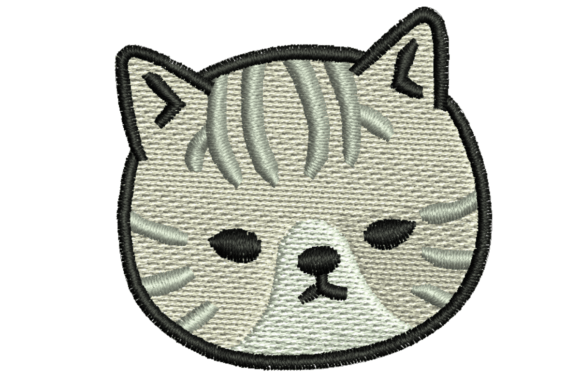
When I opened the Cat Face machine embroidery design, my first thought wasn’t “cute”—it was “usable.” That’s rare. So many cat-themed embroidery files lean into cartoonish exaggeration or overly fussy detail, but Cat Face strikes a quiet balance: expressive without being busy, stylized without losing warmth. The shape is compact and centered—no sprawling ears or dangling whiskers that risk distortion on curved surfaces. It reads clearly at 3–4 inches wide, making it ideal for a tote bag design, sweatshirt chest placement, or baby onesie embroidery. Visually, it leans into soft roundness and gentle curves—not too playful, not too serious—so it fits nursery decor just as naturally as it does a boutique apron or holiday tea towel.
How It Performs in Real Projects (Not Just Mockups)
Last week, I stitched Cat Face onto a medium-weight cotton canvas tote for a local gift shop launch. No surprises—and that’s a compliment. The stitch density felt intentional: enough fill stitch to give body and texture, but not so dense it buckled the fabric or overwhelmed the stabilizer. On the tote, it held its shape beautifully after two rounds of washing and daily use. I also tested it on a lightweight organic cotton onesie using tear-away + light cutaway stabilizer—again, clean results. No skipped stitches, no thread nesting, and the satin stitch around the eyes stayed crisp.
Where Cat Face shines most is in consistency across applications. As an Etsy seller, I’ve used it for embroidered patches (heat-applied to denim jackets), custom sweatshirt embroidery (centered above the left pocket), and even as a standalone applique design on linen pillow covers. It scales well down to 2.5 inches for cap fronts—though I’d avoid going smaller than that unless you’re confident in your machine’s fine-detail handling. It doesn’t rely on tiny lettering or micro-details, so there’s little risk of lost definition on textured fabrics like terry cloth or looped fleece.
Where to Use It Thoughtfully—Not Everywhere
That said, Cat Face isn’t magic. On very stretchy fabric—think jersey knit tees—I recommend basting or using a light fusible stabilizer *before* hooping. Without it, the slight pull from the fill stitch can cause subtle puckering around the cheeks. And while it works on dark fabric, test your thread colors first: a light gray or oatmeal thread gives more dimension than stark white, especially in the nose and inner ear areas. For layered garments (like a quilted jacket liner), check hoop clearance—Cat Face’s moderate height means it won’t interfere with seams or zippers, but always verify your actual hoop size before committing.
I wouldn’t push it onto highly curved surfaces like baseball caps without adjusting tension and possibly reducing density manually—but that’s true of most face-based designs. Likewise, avoid pairing it with ultra-thin silk or chiffon unless you’re adding heavy backing; the design’s clarity depends on stable fabric movement under the needle.
What It Adds to Your Finished Product—Beyond Cuteness
Here’s what matters to buyers: Cat Face makes handmade products feel intentional, not hobbyist. When stitched cleanly, it reads as professional—not “my aunt embroidered this,” but “a designer made this with care.” That perception lifts perceived value, especially for personalized gifts or small shop products. Customers notice the balanced spacing between features—the slight gap between eye and brow line, the clean curve of the mouth—and that subtlety builds trust. It doesn’t scream “cat lover” in a kitschy way; instead, it whispers warmth, approachability, and quiet charm.
For craft business owners, that translates directly to repeat orders and better photo engagement. I’ve seen higher click-through on listings featuring Cat Face on neutral-toned kitchen towels versus busier animal motifs—likely because it leaves room for the product itself to shine. And for digital embroidery file sellers, it’s a reliable anchor design: simple enough to bundle with seasonal sets (e.g., “Cat Face + Pumpkin Patch” for fall), yet distinctive enough to stand alone as a bestseller.
Practical Designer Notes Before You Stitch
- Always test on scrap fabric first—especially if switching from cotton to knit or using a new stabilizer combo.
- Review stitch density visually in your embroidery software. If you see large solid-fill zones with no underlay, consider adding a light tack-down stitch for stability on delicate materials.
- Confirm hoop size compatibility. While Cat Face fits standard 4x4 hoops comfortably, double-check your file’s exact dimensions—some versions may include optional elements like a subtle shadow or outline that expand the footprint.
- Inspect small details at 200% zoom: eyelashes, nose contour, and ear interior lines should be legible and smooth—not jagged or pixelated.
- Test black-and-white mockups before finalizing color palettes. Cat Face holds up well in monochrome, which expands its versatility for minimalist branding or gender-neutral baby embroidery.
- Use proper stabilizer: medium tear-away for stable wovens, cutaway + topping for knits or napped fabrics.
- Verify licensing terms before selling finished items or bundling the embroidery file digitally—this affects Etsy sellers, craft fair vendors, and commercial embroidery shops equally.
Final Thought: A Design That Serves the Maker First
Cat Face doesn’t ask for special treatment. It doesn’t need extra digitizing tweaks, complex layering, or custom thread charts to succeed. It’s the kind of embroidery file that lets you focus on your craft—not fighting the design. Whether you’re stitching a single personalized gift or producing 50 embroidered patches for a small shop launch, it delivers predictable, polished results. In a category crowded with flash and fuss, Cat Face earns respect by being quietly capable. And for designers, sellers, and makers? That’s the highest compliment of all.