Hanging Autumn Leaves
First Impression: Warm, Minimal, and Instantly Seasonal
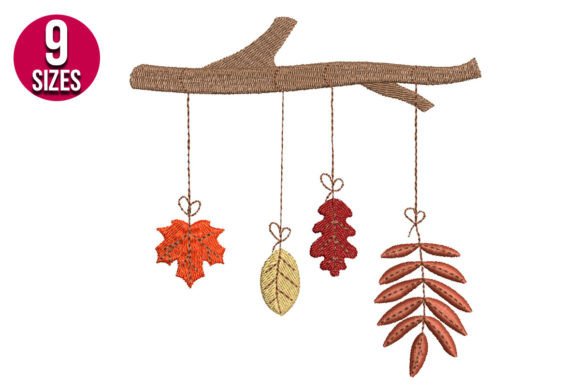
As an embroidery designer who’s prepped over 200 craft fair booths, my gut reaction to Hanging Autumn Leaves is immediate: it’s cozy without being cutesy, simple without feeling sparse, and autumnal without leaning into cliché. There’s no pumpkin, no “fall y’all” script, no cartoonish maple—just clean leaf silhouettes with gentle drape and organic spacing. That makes it feel premium, not generic. It lands somewhere between modern farmhouse and quiet elegance—exactly the tone that draws shoppers lingering at handmade market tables.
Where It Shines on Craft Fair Products
Tote bags: A single Hanging Autumn Leaves motif centered on the lower third of a natural canvas tote reads effortlessly—no explanation needed. It’s large enough to read from six feet away but subtle enough to pair with hand-lettered tags or minimalist packaging.
Aprons and tea towel embroidery: This design thrives on vertical flow. On a chef-style apron, it hangs beautifully along the waistband or cascades down one corner of a linen tea towel. The “hanging” element isn’t just poetic—it’s functional composition. Customers notice movement first, and this design delivers it.
Embroidered patches and fabric pouches: At 3–4 inches tall, Hanging Autumn Leaves scales cleanly as a patch—no distortion, no lost detail. It’s ideal for iron-on or sew-on use on denim jackets, backpacks, or small drawstring pouches (think gift-ready lavender sachets or artisan soap bundles).
Pillow covers and market bags: As a focal point on a 16x16-inch linen pillow cover, it adds texture without overwhelming. On a heavyweight cotton market bag, it holds up beautifully—even when folded in half on a crowded booth shelf.
Caps and curved surfaces: Caution here. While the design’s open negative space helps, avoid placing it across the full front curve of a structured cap unless you’ve tested stitch registration. Stick to flat panels (side gussets, back straps) for reliability.
What Makes It Sell—Beyond the Stitch
This isn’t just another machine embroidery design. It’s a visual anchor. At a craft fair, where 87 other vendors also have “fall-themed” items, Hanging Autumn Leaves stands out because it feels intentional—not seasonal decor, but curated home styling. Buyers don’t just see “autumn”; they see *cozy kitchen*, *slow living*, *thoughtful gifting*. That emotional resonance lifts perceived value—making it easier to price at $38 for an embroidered tea towel instead of $24.
For Etsy sellers and small shop owners, it’s highly repeatable. You can produce five variations (linen, oat, charcoal, cream, sage) using the same digital embroidery file, then photograph them against consistent backdrops for cohesive listings. Its simplicity means fewer color changes per hoop—less thread waste, faster turnaround, and smoother batch production.
Production Notes Every Embroidery Designer Should Check
- Test on scrap fabric first—especially textured towels. Dense stitch areas (like leaf stems or overlapping edges) can sink into terry cloth or waffle weave unless you use cutaway + tear-away stabilizer combo.
- Thread contrast matters more than you think. On dark fabric, opt for matte-finish ecru or burnt sienna thread—not stark white—to preserve the “cozy” mood. Avoid metallics; they clash with the design’s softness.
- Review spacing and hoop size. If the design includes multiple leaves, confirm whether they’re grouped in one hoop or require re-hooping. Single-leaf versions are safer for fast-paced craft fair prep.
- Inspect stitch density before cutting fabric. Overly dense fill areas may pucker on lightweight cotton or stretchy knits—ideal for tea towels and totes, less so for baby onesies or scarves.
- Create at least one real mockup—not just a printable mockup. A photo of Hanging Autumn Leaves stitched on your actual apron fabric, lit naturally, tells buyers more than ten stock renders.
- Compare fabric colors side-by-side. What reads as “warm taupe” on screen may look muddy on unbleached linen. Hold swatches under booth lighting.
- Confirm commercial licensing. Since this is intended for finished product resale (not just personal use), verify that the embroidery file includes permission for commercial embroidery and small shop product use.
Booth & Brand Impact: Why It Strengthens Your Table
A well-placed Hanging Autumn Leaves sample—a linen pouch beside a bundle of cinnamon sticks, a tea towel draped over a ceramic mug—creates rhythm and warmth. It doesn’t shout. It invites. That’s critical when customers are scanning dozens of booths in under 90 seconds.
It also supports brand consistency. Whether you sell botanical prints, slow-living goods, or heirloom kitchenware, this design reinforces calm, craftsmanship, and seasonality—without locking you into one trend. Unlike overly literal motifs, it won’t feel dated by Thanksgiving. You can carry it through early winter with neutral threads and layered textures.
And for buyer engagement? People reach for it. Not because it’s flashy—but because it feels touchable, human, and quietly special. That tactile pull translates directly to sales: one customer picks up the pillow cover, turns it over, sees the clean backstitching, and says, “I need this for my reading nook.” That’s the moment Hanging Autumn Leaves earns its place—not as decoration, but as connection.
Final Thought: Less Is Truly More Here
In a market flooded with busy, over-digitized patterns, Hanging Autumn Leaves is a breath of crisp air. It doesn’t try to do everything. It does one thing exceptionally well: evoke autumn with grace, simplicity, and quiet confidence. For craft fair sellers, Etsy sellers, and boutique makers building a loyal audience—not just moving inventory—it’s not just a machine embroidery design. It’s a trusted design asset. Use it thoughtfully, test it thoroughly, and let its understated warmth do the talking.