Faux Embroidery Christmas Alpha Set
First Impressions: Festive, Friendly, and Ready for Real Fabric
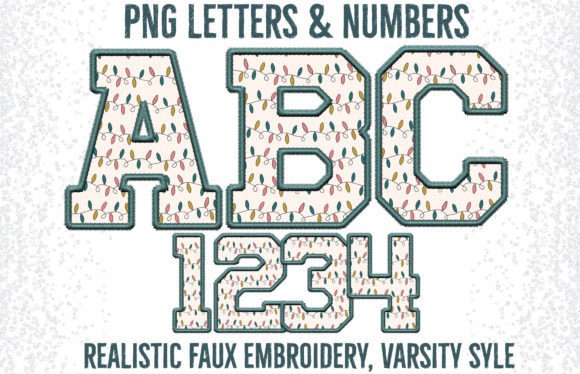
Unzipping the Faux Embroidery Christmas Alpha Set feels like opening a well-curated holiday craft kit—no fluff, just 42 clean PNG characters (A–Z, 0–9, plus apostrophe and dash) designed to mimic hand-stitched charm. As a designer who’s stitched hundreds of client projects—from boutique aprons to baby onesies—I immediately notice what this set *doesn’t* do: it doesn’t try to be hyper-realistic embroidery with visible thread texture or stitch direction. Instead, it leans into a warm, slightly nostalgic “faux” aesthetic—rounded edges, gentle shadowing, soft contrast—that reads as handmade at a glance but holds up beautifully in digital mockups and printed previews.
A Real-World Test: Stitching “Merry” on a Linen Tea Towel
Last week, I used three characters from the Faux Embroidery Christmas Alpha Set—“M”, “E”, and “R”—to create a small monogrammed holiday tea towel for a local kitchen boutique. The goal wasn’t photorealism—it was cohesion: something that felt intentional, seasonal, and quietly elevated next to hand-printed flour sacks and ceramic mugs. Because these are PNGs—not embroidery files—I converted them using my digitizing software, keeping stitch density moderate and opting for satin stitch outlines with subtle fill stitch interiors. On medium-weight linen, the result had gentle dimension without bulk, and customers responded to the “hand-finished” vibe—not because it looked like real thread, but because it *felt* considered.
Where This Alpha Set Shines (and Where It Doesn’t Pretend To)
This isn’t an applique design or a machine embroidery file out of the box—it’s a graphics set built for flexibility. That means it excels where visual tone matters more than technical stitch fidelity:
- Custom apparel: Perfect for sweatshirt chest logos, tote bag lettering, or cap front text—especially when you want festive charm without dense satin stitching.
- Baby embroidery: Soft curves and open spacing make “Noel” or “Joy” legible even at 1.5" tall on cotton knit onesies (just digitize carefully and use lightweight cutaway stabilizer).
- Holiday gifts & boutique branding: The consistent weight and rhythm across letters help build recognizable shop identity—think embroidered pillow covers with “Believe” or kitchen towels with “Cookie Time”.
- Etsy listings & printable mockups: These PNGs drop cleanly into Canva or Photoshop. I’ve used them to generate five distinct product mockups in under 20 minutes—ideal for testing colorways or seasonal bundles before committing to physical samples.
Use With Care: Textures, Curves, and Tiny Details
That said—this is not a one-size-fits-all embroidery file. Because the design relies on optical clarity rather than structural stitch logic, some real-world constraints demand attention:
- Small hoop sizes: Below 2.5", fine details like the inner curve of “B” or the dot on “i” can blur. Always test at your intended size on scrap fabric first.
- Textured or dark fabric: The subtle drop shadows and soft edges fade on heavy terry cloth or black fleece. For those, simplify: convert to solid black/white versions and increase stroke weight slightly before digitizing.
- Stretchy or thin fabric: Avoid direct use on ribbed knits or voile without robust stabilizer—the faux-thread look depends on crisp edges, which stretch distorts.
- Curved surfaces (caps, hats): The uniform baseline works best on flat or gently curved areas. For crown embroidery, consider re-spacing letters manually to follow the curve naturally.
What It Adds to Your Finished Product—Beyond the Letters
Using the Faux Embroidery Christmas Alpha Set subtly shifts how people *perceive* your handmade product. It signals intention—not just “I added text,” but “I chose a voice.” Customers don’t buy letters; they buy warmth, nostalgia, and care. A personalized gift tag with “Made with Love” in this set reads more thoughtfully crafted than a generic font—even before it’s stitched. For Etsy sellers, that perception lifts perceived value. For small shop owners, it supports cohesive branding across embroidered patches, aprons, and holiday cards. And for craft fair vendors? It helps your booth feel curated, not cluttered.
Practical Designer Notes Before You Digitize
Before turning these PNGs into real stitches, here’s what I always check:
- Test on scrap fabric—not just for fit, but for how thread colors interact with the design’s implied shading.
- Review stitch density in your digitizing software: keep fills open enough to avoid puckering on lightweight cotton.
- Confirm hoop size compatibility—some letters (like “W” or “M”) span wider than expected at larger scales.
- Inspect corners and terminals: the faux-embroidery effect lives in clean transitions—avoid over-digitizing tiny serifs that won’t resolve in thread.
- Mock up in black and white first to verify contrast and legibility—especially for products meant for gifting or display.
- Check licensing before selling finished items or reselling digitized versions—this set is for personal and commercial use, but always verify terms directly with the seller.
Final Thought: A Thoughtful Tool, Not a Magic Button
The Faux Embroidery Christmas Alpha Set won’t replace your go-to satin-stitch alphabet—but it fills a quiet, valuable gap: the need for festive, cohesive, low-fuss lettering that feels handmade without demanding high-density stitching or complex layering. It’s especially strong for craft business owners juggling speed and soul—those who sell embroidered kitchen towels at farmers’ markets, personalize baby blankets for new parents, or build holiday collections for Etsy shops. Used intentionally, it adds warmth without weight, charm without clutter, and consistency without compromise. Just remember: it’s a starting point, not the finish line. Your skill—and your attention to fabric, stabilizer, and context—is what turns these graphics into trusted, beautiful finished products.